


Choosing the right crib mattress can feel like a daunting task, but it doesn’t have to be. After all, this is where your little one will spend countless hours dreaming of world domination—or at least a solid nap. With so many options available, parents often find themselves lost in a sea of confusing jargon and endless reviews. That’s where this guide steps in, ready to cut through the clutter.
Importance Of Choosing The Right Crib Mattress
Choosing the right crib mattress significantly affects a baby’s sleep quality. It influences comfort, safety, and overall well-being. A firm mattress reduces the risk of suffocation and encourages a safe sleep environment. Parents often notice that a supportive mattress promotes healthier sleep patterns.
Material variety causes confusion among parents. Options range from foam to innerspring and organic materials. Understanding these types helps parents select a mattress that meets their child’s needs. Each material has unique properties affecting safety and comfort.
Safety standards play a critical role in purchasing decisions. Crib mattresses must comply with safety regulations outlined by organizations such as the Consumer Product Safety Commission (CPSC). These guidelines ensure that mattresses are free from harmful chemicals and provide a safe sleeping surface.
Size matters too. Crib mattresses should fit snugly in the crib without gaps, preventing potential hazards. A proper fit also contributes to a peaceful sleep environment.
Comfort contributes to sleep quality. Babies require adequate support to develop healthy sleep habits. Research suggests that a firmer surface can help infants sleep longer and rest deeper.
Price varies significantly among crib mattresses. Budget-friendly options exist alongside high-end alternatives. Parents should assess their priorities when determining their budget, balancing quality with cost.
Research reviews and ratings when selecting a mattress. Evaluating customer feedback provides insights into longevity and performance. Trustworthy sources aid in making informed decisions.
Considering these factors leads to a smarter choice in crib mattresses, ensuring a restful and safe sleep for infants.
Types Of Crib Mattresses
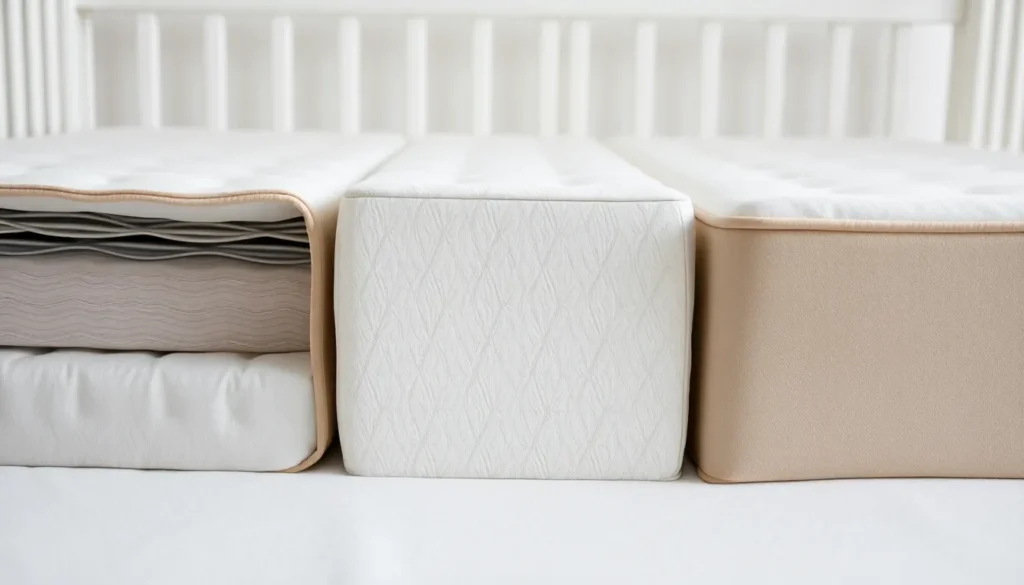
Selecting the right type of crib mattress is essential for ensuring a safe and comfortable sleep environment for infants. Here are the primary types of crib mattresses parents encounter.
Innerspring Mattresses
Innerspring mattresses consist of a core of steel coils, offering support and durability. These mattresses come with various coil counts, affecting firmness and comfort levels. Many are designed with a cushioning layer of foam or fiber for added comfort. Parents appreciate the breathability of innerspring models, promoting better airflow. They often provide a traditional feel, making them popular among caregivers. Additionally, the longevity of innerspring options tends to be higher when compared to other types.
Foam Mattresses
Foam mattresses are lightweight and often easier to handle than innerspring models. They typically use high-density foam, which supports infants and conforms to their body shapes. Many options feature hypoallergenic properties, reducing allergy risks. These mattresses can come in different firmness levels, allowing for personalized choices. Foam options also include waterproof covers, enhancing maintenance ease. Parents frequently opt for foam mattresses because of their affordability and comfort.
Organic Mattresses
Organic mattresses utilize natural materials such as cotton, wool, or latex, appealing to eco-conscious parents. These options often lack harmful chemicals, promoting a healthier sleep environment. Certifications, like GOTS (Global Organic Textile Standard), guarantee that these mattresses meet strict organic standards. Many organic mattresses also emphasize breathability, keeping infants cool during sleep. Additionally, their durability often leads to longer-lasting use compared to conventional options. Parents find peace of mind knowing they are providing a safe sleep surface for their babies.
Top Crib Mattresses Reviewed
This section reviews top crib mattresses, highlighting key features and benefits to assist parents in making informed choices.
Mattress 1: Features and Benefits
The Newton Baby Crib Mattress ranks highly for its breathable design, promoting airflow while maintaining firm support. Parents appreciate its washable cover, which simplifies cleaning and ensures hygiene. With a 100% recyclable core, this mattress aligns with eco-friendly values. Its lightweight structure makes changing sheets quick and easy. Many users report a noticeable improvement in their child’s sleep quality after using this mattress.
Mattress 2: Features and Benefits
The Sealy Baby Crib Mattress offers excellent firmness and affordability, catering to budget-conscious families. Made with high-quality innerspring coils, it provides strong support essential for infant development. Waterproof surfaces prevent spills from seeping in, promoting durability and sanitation. Parents value its lightweight design, allowing easy maneuverability when changing bedding. Many reviews note this mattress’s longevity, making it a wise investment over time.
Mattress 3: Features and Benefits
The Naturepedic Organic Crib Mattress stands out for its commitment to health and safety. Crafted from organic cotton and free from harmful chemicals, it assures parents of a safe sleep environment. Dual-sided construction offers different firmness levels for infants and toddlers, adapting to a child’s growth. Its waterproof layer provides protection against allergens and simplifies cleaning. Numerous parents express satisfaction with this mattress’s ability to support healthy sleep habits, contributing to peace of mind.
Safety Considerations
Selecting a crib mattress involves critical safety aspects that influence a baby’s well-being. Knowledge of certifications and appropriate usage is essential for parents.
Certifications To Look For
Seek certifications that ensure a crib mattress meets stringent safety standards. The Greenguard Gold certification, for example, indicates low chemical emissions for better indoor air quality. CertiPUR-US certification verifies that foam used in mattresses is free from harmful chemicals and meets safety requirements. Additionally, look for products compliant with CPSC regulations, which outline safety guidelines for children’s products. A mattress with these certifications provides peace of mind for parents, ensuring a safer sleep environment for infants.
Recommended Age and Usage
Follow guidelines regarding age and intended use when selecting a crib mattress. For infants, a firm mattress encourages safe sleep and supports developing bodies. Many manufacturers recommend using crib mattresses until babies transition to a toddler bed, typically around 2 to 3 years old. Using a dual-sided mattress allows parents to switch between firmness levels as their child grows, catering to different developmental needs. Regularly assess the mattress condition; any signs of wear or damage may indicate the need for replacement to maintain safety and comfort.
Choosing the right crib mattress is crucial for ensuring a safe and restful sleep for infants. Parents can navigate the myriad of options by focusing on key factors such as firmness, materials, and safety certifications. Understanding the benefits of different mattress types helps in making an informed decision that aligns with their child’s needs.
Investing time in research and considering reviews can lead to a mattress that not only fits the budget but also enhances sleep quality. With the right crib mattress, parents can create a nurturing sleep environment that supports their child’s development and well-being.


