


Family time is precious, but let’s face it—sometimes it can feel like a game of dodgeball, with everyone avoiding eye contact and retreating to their screens. Enter the world of family games and activities, where laughter reigns and bonding happens faster than you can say “who’s winning?” From board games that spark friendly rivalries to outdoor adventures that’ll have everyone racing for the finish line, there’s something for every family member to enjoy.
Imagine a Sunday afternoon filled with giggles, playful banter, and maybe a little bit of chaos. These activities not only break the ice but also create memories that last a lifetime. So put down those devices and gather the troops—it’s time to unleash the fun! With a treasure trove of games and activities at your fingertips, boredom doesn’t stand a chance.
Importance Of Family Games And Activities
Family games and activities provide various benefits, enhancing relationships among family members. They encourage communication, allowing members to express themselves openly while fostering understanding. Bonding moments arise through shared experiences, which can lead to stronger emotional connections.
Playing games together promotes teamwork, making individuals work toward common goals. This cooperation builds skills that transcend beyond the game, impacting everyday life. Laughter often accompanies these activities, creating a joyful atmosphere that lightens stress and builds memories.
Engagement in physical activities also boosts physical health. Participation in sports or active games prompts movement, contributing to fitness and well-being. Exercise can even become a fun part of family time, countering sedentary lifestyles prevalent in modern society.
Increased creativity stems from various games, especially those requiring problem-solving and imagination. The family may engage in activities like board games or creative crafts, stimulating their minds together. Such experiences spark creativity that benefits children in their academic and personal lives.
Social skills develop through interaction during these games. Understanding rules, taking turns, and dealing with winning and losing are integral lessons that prepare children for future social environments. Each game presents an opportunity to cultivate resilience and empathy.
Setting aside device-free time for these activities helps families prioritize togetherness over technology. Hosting game nights or weekend outings fills the home with connection and fun. Celebrating victories and overcoming challenges together makes family memories last a lifetime.
Types Of Family Games
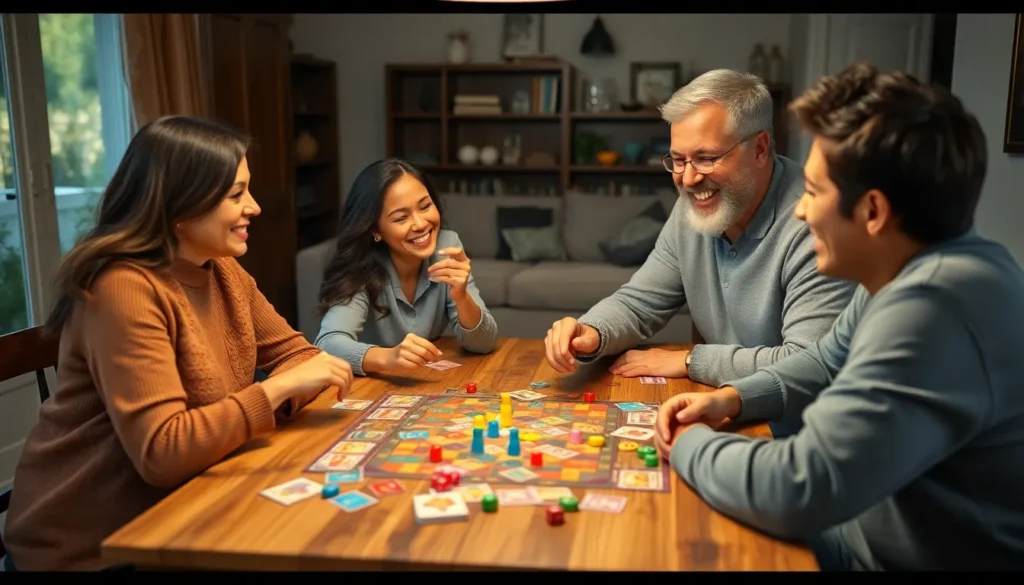
Family games encompass a variety of activities that cater to all ages, ensuring everyone stays engaged. Different types of games contribute unique benefits to family bonding and interaction.
Board Games
Board games offer a wide selection of themes and strategies, appealing to diverse interests. Classic options like Monopoly and Scrabble encourage critical thinking and healthy competition. Newer titles such as Catan and Ticket to Ride introduce collaborative play, fostering teamwork. Participation in board games enhances communication skills while allowing for fun family discussions. Players engage face-to-face, creating laughter and spontaneous moments. Families can discover hidden talents in strategy or creativity through game nights. Gathering around the table invites connection and sparks joy.
Card Games
Card games present another engaging way for families to connect. Games like Uno and Go Fish are simple yet thrilling, keeping younger children entertained. Adult-friendly games such as Rummy or Poker can also be enjoyed, accommodating older family members. Quick playtimes allow for repeated rounds, encouraging laughter and excitement throughout. Players must strategize and adapt their approaches, enhancing critical thinking skills. Card games encourage emotional resilience, as winning and losing becomes part of the experience. Setting aside time for a card game night cultivates a sense of togetherness that becomes cherished.
Outdoor Games
Outdoor games provide the perfect opportunity for physical activity and fresh air. Games like tag and capture the flag involve everyone in active play, promoting fitness and teamwork. Equipment-based activities such as badminton or frisbee add variety, ensuring different skills are showcased. Families can also enjoy traditional sports, like soccer or basketball, fostering friendly competition. Inviting neighbors to join creates a vibrant atmosphere, strengthening community ties. Engaging in outdoor play reduces screen time while promoting physical well-being. Capturing moments in nature enhances family bonding and leaves lasting memories.
Activities For All Ages
Families can engage in a wide range of activities that cater to various interests and age groups. Encouraging creativity and collaboration leads to fun bonding experiences for everyone.
Creative Crafts
Engaging in creative crafts fosters imagination and self-expression. Families can work on projects that suit all skill levels, ensuring everyone participates. Crafts like painting, scrapbooking, or making jewelry allow for personal touches. These activities promote teamwork as family members share ideas and techniques. Projects can culminate in a family art show, showcasing everyone’s hard work. Spending time together while creating something meaningful reinforces relationships and creates lasting memories.
Cooking Together
Cooking together brings families together in a unique way. Families can whip up meals that cater to diverse tastes and preferences. Easy recipes, such as homemade pizza or tacos, allow everyone to contribute their favorite toppings. Cooking encourages communication and cooperation, enhancing family dynamics. Each cooking session can transform into a learning experience, teaching culinary skills and nutrition. After the meal, families can enjoy their creations together, savoring the flavors of their teamwork. This shared experience creates warmth and strengthens bonds.
Benefits Of Playing Together
Family games and activities offer numerous advantages that enhance relationships. Engaging in shared experiences creates lasting memories, fostering strong connections among family members.
Strengthening Family Bonds
Shared activities cultivate intimacy, allowing family members to connect on a deeper level. Laughter during games not only relieves stress but also builds trust. Children, in particular, benefit from observing how adults engage and interact positively, reinforcing emotional security. Spending time together encourages open communication, enabling family members to express feelings and share thoughts more freely. By participating in each other’s lives through play, families create an environment where everyone feels valued and included.
Encouraging Teamwork
Collaborative games teach essential teamwork skills. Family members learn to cooperate when strategizing or solving challenges together. Children gain insights into the importance of contributing toward common goals, enhancing their social skills. Various game formats require players to rely on each other, promoting a sense of community and shared responsibility. Experiencing both victories and defeats together solidifies unity, illustrating valuable lessons about cooperation and support. Engaging in these activities consistently develops relationships and a collective sense of achievement.
Tips For Choosing The Right Games And Activities
Consider the age range of family members when selecting games and activities. Activities should be accessible and enjoyable for everyone involved. Balance complexity and simplicity to ensure engagement from all ages.
Evaluate the interests of the family. Picking games that reflect shared interests enhances excitement and participation. Exploring various themes can inspire creativity and collaboration across generations.
Think about the setting in which the games will take place. Indoor spaces might be suitable for board games, while outdoor settings promote physical games. Choosing the right environment contributes to the overall enjoyment and atmosphere.
Determine the time available for activities. Short games may fit better into busy schedules, while longer, more in-depth activities allow for extended bonding. Designing a mix of both can maximize family engagement over time.
Investigate the number of participants. Some games enhance interaction in smaller groups, while others accommodate larger gatherings. Selecting the right game size ensures everyone feels included and valued.
Research the balance between competition and cooperation. Games that promote teamwork can foster stronger family bonds, while competitive games offer exhilarating challenges. Opting for a combination encourages diverse experiences and caters to various preferences.
Reflect on the learning opportunities provided by certain activities. Educational games offer fun ways to develop critical thinking and problem-solving skills. Integrating learning with play nurtures children’s growth while strengthening family connections.
Family games and activities offer a wonderful opportunity to strengthen bonds and create cherished memories. By prioritizing time together without screens, families can engage in meaningful interactions that enhance communication and cooperation. The laughter and joy shared during these moments not only relieve stress but also teach valuable life skills.
Whether it’s a competitive board game or a collaborative cooking session, the key is to choose activities that resonate with all family members. Embracing this time together fosters a sense of community and shared purpose, ensuring that every participant feels valued and included. As families explore these engaging options, they’ll discover the lasting impact of quality time spent together.


